A chatbot answers and stops. An agent takes the goal, breaks it down, acts, checks itself, and comes back when it should. The anatomy, the failure modes, and the two rules that keep them employable.
Same model underneath, different loop around it. That is the honest definition of an AI agent. Put a chatbot next to an agent and the difference shows up in the boring middle of a task: the chatbot returns an answer, the agent returns a completed thing, or comes back to say which step failed and why.
The anatomy of a run
Planning comes first. The model writes itself a short task list, the way a person scribbles steps before a repair: fetch the customer's open tickets, compare against the shipping log, draft the apology, hold it for approval. The list can be literal or implicit, but every serious framework makes the model state it out loud, because a plan you can read is a plan you can stop.
Then tools. A tool is anything the agent can call: search, a database, a calendar, an email draft, a script you wrote. The list of available tools is the job description; the agent can only do what you let it reach.
Then observe, and this is the step most demos skip. The agent reads back what actually happened. That file it claims to have edited: did it change? The query it ran: was the empty answer zero matches, or a broken filter? An agent that never checks its own outputs is just a fast typist with permissions.
Then the loop repeats until the task finishes or the agent hits a boundary you drew. Good boundaries are boring and absolute. Anything that moves money, deletes data, or talks to a customer goes out only after a human yes. That rule is not a limitation to apologise for. It is the reason anyone can let software near their business at all.
What breaks, and what it teaches
The classic first-week failures are remarkably consistent across everyone building these. An agent retries a webhook it believes failed, and your customer gets the same apology twice; every tool must check whether it already did the thing before doing it. Another favourite: the agent finds an old document and executes the instructions inside it, which works great right up until the document contains a request that was never meant for it. Retrieval is a mouth, and you have to decide what is allowed to talk back. And every agent will, occasionally, plan confidently toward something wrong with no visible red flag, which is precisely why the plan gets shown to a person before the doing starts.
These failures feel discouraging and are actually the curriculum. A chatbot either answers or mumbles. An agent can visibly fail at step four, and then you fix step four. That is engineering, which is why people who learned on small agents stopped being impressed by big ones.
The honest start
One email a day, not your whole pipeline. The right first agent watches one inbox, drafts one reply, waits for your click. You will learn more from a week of that, including the two or three times it surprises you, than from any guide, this one included. The Live Labs run exactly this build, mistakes on screen, because the mistakes are the point.
Kit for this lesson

An agent that touches your network deserves a machine it cannot embarrass you in front of. A $365 little home server is the standard answer, and it doubles as your sandbox.
View on Amazon
The next size up for a local agent stack: a small NUC, Docker, an 8B model for the cheap loops, and no cloud bill for the experiments that fail.
View on Amazon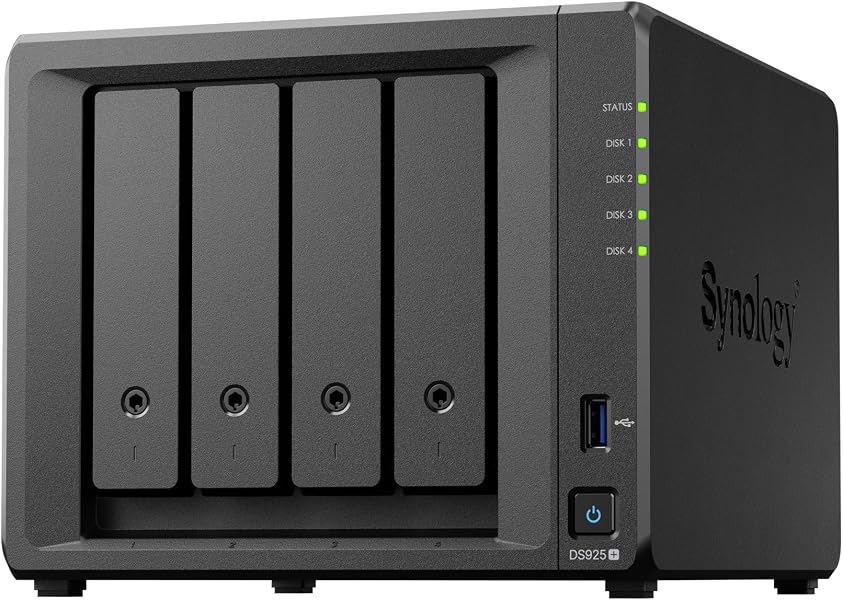
Agents generate files, and files want somewhere that survives a dead laptop. Four bays, sensible speed, and it earns its desk space quietly.
View on AmazonAs an Amazon Associate, AI Universe City earns from qualifying purchases. Prices link to Amazon and may change; the picks above are what we actually use in the Labs.