The concept people feel they are supposed to understand, explained without matrices, then built in an evening. The mental model matters more now that almost nobody trains and everybody prompts.
Strip the vocabulary and a neural network is this: a machine with a very large number of adjustable knobs, where learning means nudging the knobs until the output matches what you wanted. That is the whole trick. The intimidating mathematics is a good question with a plain answer, which is how to nudge efficiently, and the standard answer is gradient descent: nudge a little the direction that reduced the error last time, and repeat until it stops helping. A modern model has billions of knobs and the training runs are trillions of nudges. That is all the scaling story really is.
The layer cake, in words
Inputs are the question: pixels, a sentence, the numbers off a machine's sensor. Hidden layers build features in stages: edges become shapes become faces, letters become words become intent. Each layer is knobs again, and "deep" just means more stages of re-representing the same input closer to the answer. The output is the result plus a confidence number. Training is showing examples, comparing the answer to the truth you already know, nudging knobs, and not looking away until the error stops falling. That's it. That's the network.
Why care, if you will never train one
Because every judgment call you will make about modern AI inherits from this picture, and the inheritance is where the practical knowledge lives. Three facts, and they cover most of it.
It learned from examples like yours, not rules about your situation. Which is why a hiring model trained on a decade of past hires reproduces the past's preferences: bias is not a malfunction, it is the objective doing its job on an unaudited pile. It produces the most likely next thing. Which is why it is fluently right most of the time and fluently wrong some of it, and why no upgrade removes that, because confident guessing is not a bug, it is the thing itself. And more knobs with more examples buy real, visible capability, which is why labs keep building bigger, small models keep getting cheaper, and your $600 mini PC keeps improving without you buying anything.
Three sentences on an index card. A person who actually believes them asks better questions of every AI product they touch: what was it trained on, what does likely mean here, and how many knobs does this job need. That is the whole literacy, and it survives every model release, which is more than you can say for most AI advice.
The weekend build
Ten years of explanations end the same way: do it. A dozen lines of Python, a tiny network, a digit classifier that learns in minutes on a laptop while you watch the loss curve come down like a dial finding its mark. Then you see the three facts happen in your own results, which is the only way they stick. No matrix anxiety survives contact with your first trained network, and the people who skip the training usually keep the anxiety for years.
Kit for this lesson

A first network trains in minutes, but first curiosity never stops there. An RTX GPU in a $1,200 laptop turns a weekend of real experiments into something that does not queue on a free tier.
View on Amazon
The step up that runs a fine-tuning job and a local assistant on the same machine, which is most of what a serious learner needs from hardware.
View on Amazon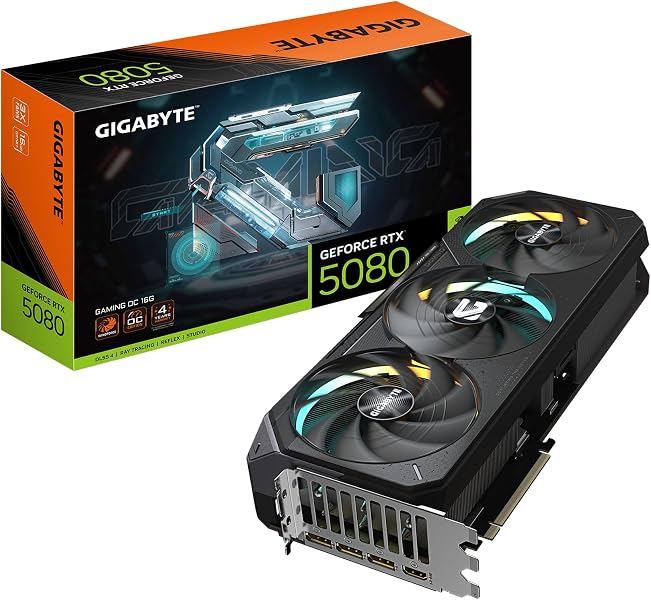
For the build-your-own route, this is the card we hand most members. 16GB of VRAM is the floor that makes fine-tuning feel possible rather than aspirational.
View on AmazonAs an Amazon Associate, AI Universe City earns from qualifying purchases. Prices link to Amazon and may change; the picks above are what we actually use in the Labs.